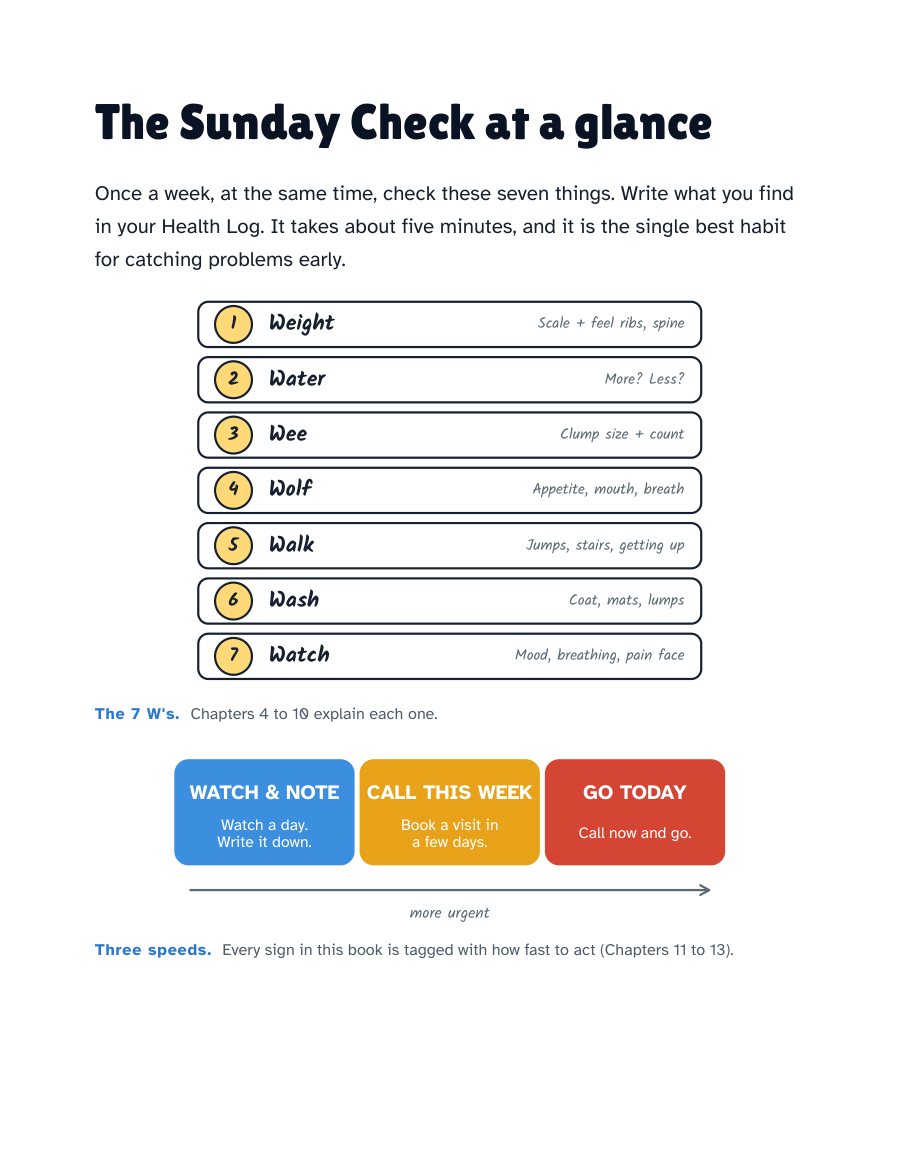
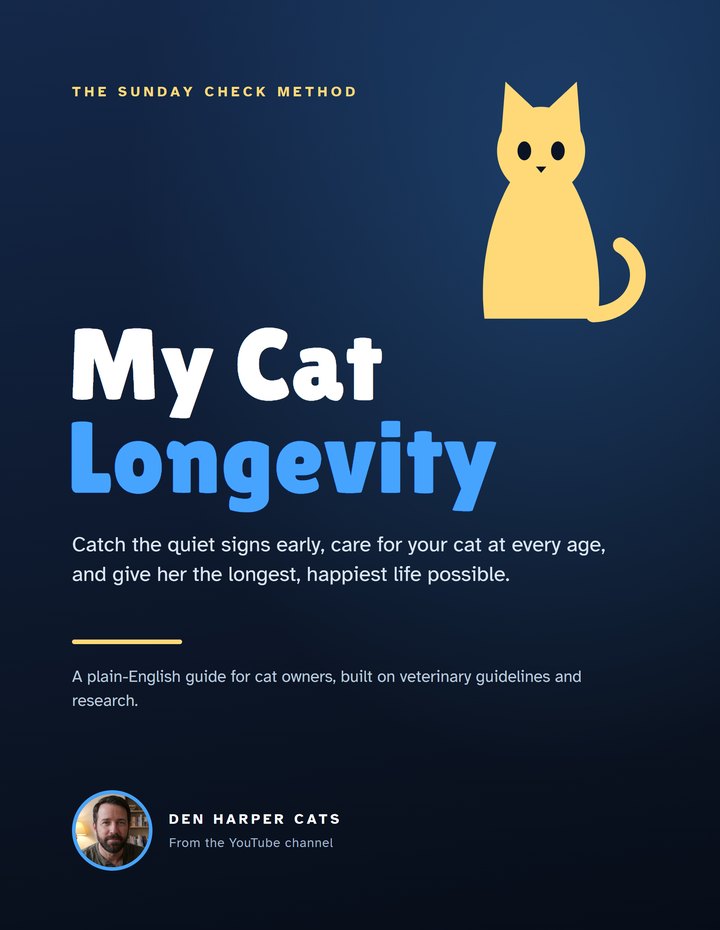
Some illnesses give no warning, and even yearly bloodwork misses things. Your cat can be sick and still look completely fine. That's not toughness. She's built to hide it. My Cat Longevity gives you the Sunday Check: seven things, five minutes, once a week, that spot the quiet signs while they're still small. Best part? It costs less than a bag of cat food!
"A cat rarely tells you she is sick. She shows you, a little at a time, in her habits."
From Chapter 1

In the wild, a cat who looks weak gets picked off, so cats learned to hide pain. A sore cat rarely limps or cries. She sleeps a little more, skips one jump, eats a little slower. Each change is tiny, and each one is easy to miss.
Thirstier. Thinner. Louder at night. Those are three of the signs owners most often explain away. Sometimes it really is age. But they're also early signs of the kidney, thyroid and other problems that are common in older cats.
When the small signs slip by, the first real clue can be a crisis: a cat who stops eating, hides, or can't jump at all. That's when a visit turns urgent and expensive at the same time, and when owners say "I should have seen something."
None of that is your fault. Cats are very, very good at hiding. The answer isn't more worry, it's a small habit: know her normal, check it once a week, and you'll see the changes while they're still small, when your vet has the most ways to help.
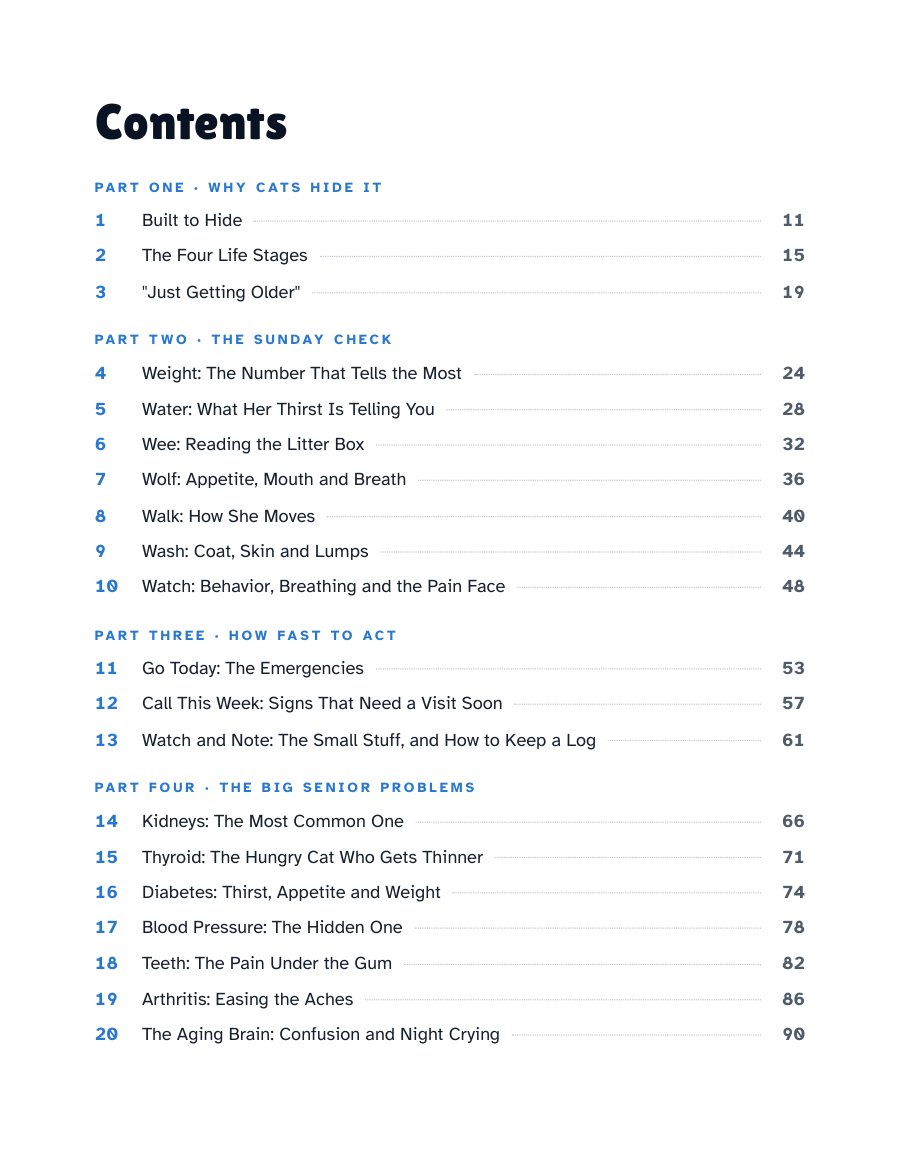
The whole book is built around one habit, the 7 W's. Each has its own chapter: what's normal, what's a warning, and exactly how to check it at home with your eyes, your hands and a kitchen scale.
The number that tells the most
What her thirst is telling you
Reading the litter box
Appetite, mouth and breath
How she moves and jumps
Coat, skin and lumps
Behavior, breathing, the pain face
Why a sick or sore cat can look fine, how cats age, and how to tell normal aging from a sign worth checking.
Seven things, five minutes, once a week. One chapter for each of the 7 W's: the habit that catches problems while they're small.
Go today, call this week, or watch and note. A simple way to know what can't wait and what can, and how to keep a log.
Kidneys, thyroid, diabetes, blood pressure, teeth, arthritis, the aging brain and lumps: what they are, the early signs, and what helps.
Feeding an older cat, getting more water into her day, an easier home, the dangers in your house, and her teeth.
Getting the most from senior visits, and spending wisely on her care.
Quality of life, comfort, and saying goodbye with love, when that time comes.
What the research says about longer lives, the key words in plain English, and the full list of sources.
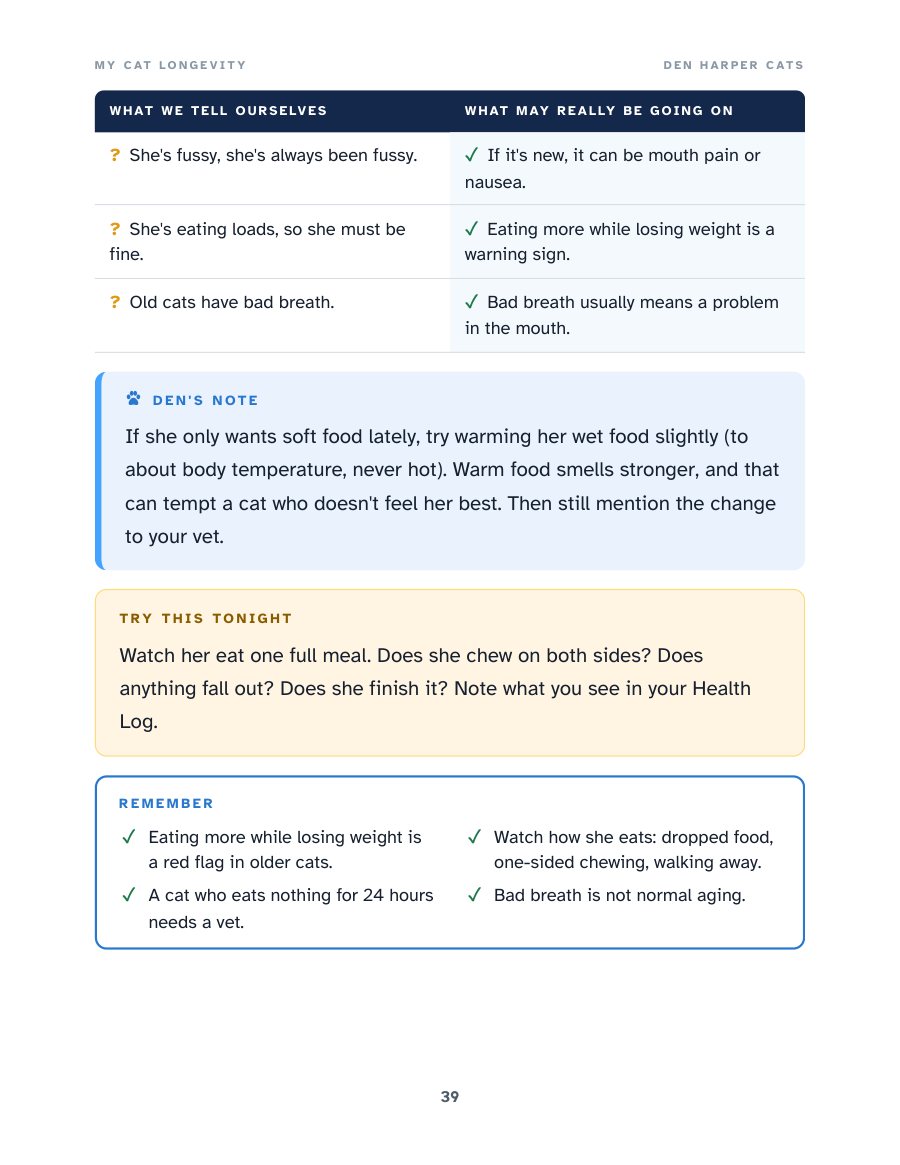
These are real pages from the book. It's set in a large typeface made for easy reading, and every sign is tagged by how fast to act.
Swipe to see more →


It turns worry into a routine. Instead of wondering whether that extra drink or skipped jump means anything, you check seven things once a week and write them down. When something changes, the triage tags tell you how fast to act, and the Vet Visit Planner helps you walk in with notes instead of guesses. Everything is written from veterinary guidelines and research, in plain English.
It isn't a vet, and it doesn't replace yours. Some illnesses give no warning at all, and even good checkups can miss things. No book can promise your cat a number of years. What it can do is help you catch what can be caught, earlier, and know which signs mean go today.

"Not to turn you into a vet, but to help you notice, so you can act early, ask good questions, and give your cat the most good years possible."
Den Harper Cats is a YouTube channel for people who share their home with an older cat. Every video, and this book, turns veterinary guidelines and research into simple steps you can use at home tonight.
Den is the channel's on-screen host, a digital presenter, and he isn't a vet. That's why the book sticks to what the vet guidelines and research say, and tells you exactly when to call yours.
Your vet sees her for a short visit. You see her every day. A lot can change in a year, and cats hide it well. The Sunday Check turns what you see at home into simple notes, so you can spot a change sooner and give your vet something real to work with. The book also covers why the vet guidelines suggest a check every six months for cats over 10.
It's written from veterinary guidelines and published research, with a full source list at the back. And it never asks you to replace your vet. Its job is to help you notice, then tell you how fast to call.
No. Most of the book is about older cats: the common senior problems, an easier home, feeding, comfort, and the later years. The Sunday Check works at any age, and it matters more the older she gets.
A kitchen or baby scale helps for weighing, and the book shows how to do it with a bathroom scale too. Everything else is your eyes, your hands and about five minutes a week.
Chapter 28 is about exactly that: spending wisely on her care, what to ask about costs, and why catching problems early is usually the cheaper path. The Vet Visit Planner also helps you make the most of every visit.
Yes. The book comes as a PDF and an EPUB. The PDF looks like the printed page and prints cleanly at home. The EPUB is made for phones and e-readers like Kindle, Kobo and Apple Books, and the text resizes to whatever is easiest for you. The 6 bonuses are print-ready PDFs, each with an EPUB reading copy too.
Checkout runs through a secure payment page. Your download links arrive right away on the confirmation page and in your email.
Seven things, five minutes, once a week. Ready to read tonight and start this Sunday.
The book plus all 6 bonuses, for a one-time . Do the Sunday Check for a full month. If it doesn't help you feel more sure about your cat's health, email us for a full refund, no questions asked, and keep everything.
Includes: My Cat Longevity · Sunday Check Card · Fridge Chart12-Month Health Log · Vet Visit Planner · Cat-Safe Home Guide · Comfort JournalTotal value · yours for